“Kai Po Che…”, “Katta Hai…”, “Wo Katta…”could be heard emanating from the rooftops, sounding almost like war cries, it was like I had taken the time machine and travelled back to my childhood days. This year on the occasion of Makar Sankranti I spotted some kites flying gloriously in the sky unchallenged and I was reminded of the times when kite flying was not just a hobby but a passion with the residents in the Hindi heartland, especially on the occasion of Sankranti 14 Jan and Independence day in and around Delhi. Alas in today’s gadget dominated world, these simple pleasures are losing out.
Flying kites is an art as also a science, you can’t just pick up one and tie the thread to it and expect kites to take to the sky by just wishing it to do so. No sir, firstly you have to identify a good kite, whose support sticks (called ‘kaman’ in local parlance) are not too rigid, just flexible enough for it to gently flow in the wind. Then the way the thread is tied to the kite has to be perfectly balanced, with two pin holes on the top cross of the support sticks and two pin holes somewhere at the three-fourth length, where knots are tied and then a triangular thread (called ‘Jota‘ here) connects these two ends. Now your kite is ready to do your bidding, provided you have done some preliminary recce, as to the wind direction and clearance, lest it get stuck in a tree or a wire immediately on soaring from the ground level.
Growing up in Dhar, a small town in MP, kite flying during the winters specially around Sankranti was something which we kids keenly looked forward to. The passionate ones would prepare the thread (Manja) weeks in advance, with glue and glass pieces (obtained from fused bulbs and tube-lights generally), to sharpen the threads so that they can vanquish the opponent’s kites in the sky followed by ‘Katta Hai’, the victorious war cry with unmatched pride. Kite flying was fun, but looting them was even more fun, as the kites which lost the duel (pench ladana), would be floating in the sky free, without any mooring and were free for picking, ‘finders-keepers’ was the accepted norm. There were groups of boys who would be armed with big bamboo sticks to catch these kites in the air and grab them.
Kite flying probably originated in China and travelled to India, although it is also mentioned in the ancient Hindu religious texts Ramayana at places. In one incident Hanuman is supposed to have recovered Bhagwan Ram’s kite from the Indralok (heaven where Indra and the Devtas reside). During the Mughal period kite flying was pursued as a sport by the rich and nobility. The most famous kite flying incident in the scientific domain, of course, was in USA when Benjamin Franklin’s experimented in 1752, when he flew a silk kite with a metal key in the rains to demonstrate that lightning was electricity.
In the modern era, there are International festivals organised in Gujarat and Telangana, where aficionados from all over the world come and participate displaying their unique kites and skills. Although I am not much of a kite flyer myself, but I have enjoyed doing it once in a while. Once when we were at Secunderabad, I actually flew one to demonstrate it to the kids, who have not been exposed to it at all.
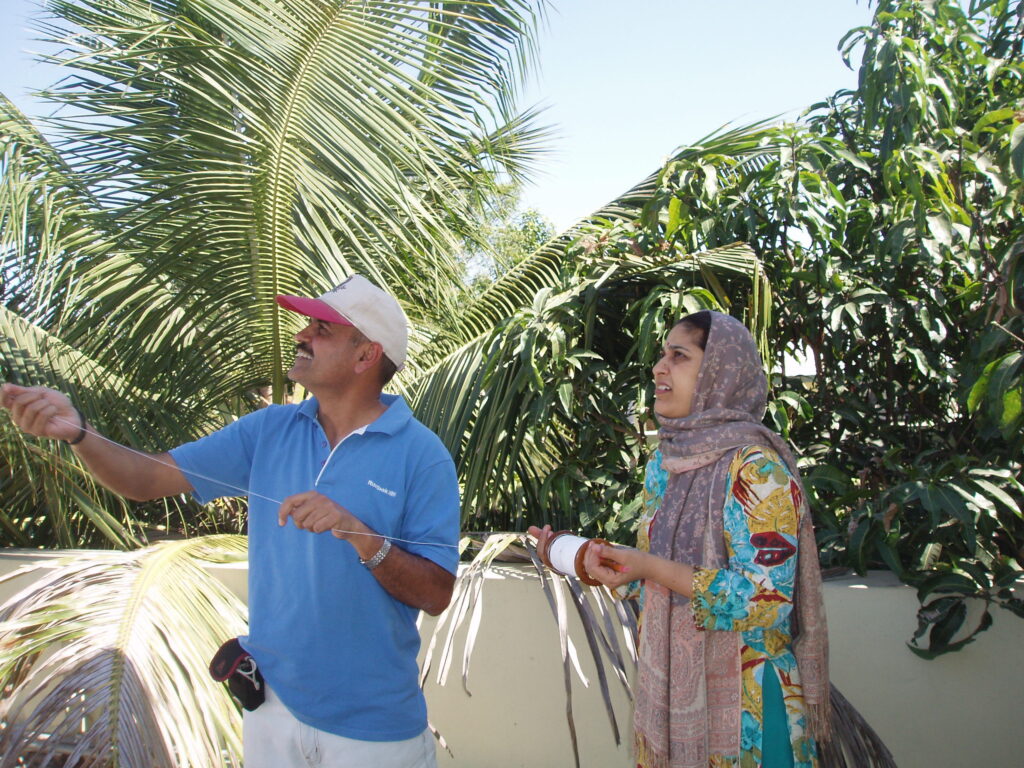
We may draw our own lessons from this experience, given the right environment, a simple piece of paper also flies mighty high but it stays there only as long as it does the bidding of the flyer, as he controls its ascent, descent and height as also the way it performs in the duels, where sometimes it is given enough leeway, so that the opponent loses patience and the kite both, or sometimes going on the offensive right from the word go and taking the adversary by surprise thereby emerging a winner. While we may wax eloquent about all these life lessons about life, finally all this comes to a nought when we are asked to go ‘fly a kite’ by the boss at work as also at home. But seriously find time and enjoy this activity once in a while, re-live your childhood.

No comments:
Post a Comment