Wednesday, 13 May 2026

IRANIAN IMBROGLIO

 Why did US and Israel go to war in Iran, when the negotiations were in advanced stage and it is reliably learnt that they were pretty close to a deal? Ever since Trump returned to power, the war was imminent and the early indications were evident all along. Since 1979, Iran has been the nemesis of the US, when Shah of Iran, a stooge of the Americans, was overthrown in the Islamic Revolution. Iranian  resilience is legendary, having survived the eight years long Iran-Iraq war, despite the overt and covert support of the West. It is the inheritor of the rich Persian civilisation. But the story actually began sometime in 1953  when US indulged in now quite infamous ‘regime change’ operation, orchestrated a coup and deposed the democratically elected popular Prime Minister Mohammed Mosaddegh, because of his decision to nationalise their British controlled oil industry and installed Shah Mohammed Reza Pahlavi on the throne.

US was made to eat a humble pie after the Tehran hostage crisis of 1979, which lasted 444 days and cost Jimmy Carter his presidency. Iran has been at the receiving end of US led sanctions since then. It has not only survived all that, but has been waging a proxy war through Hezbollah, Hamas and Houthis targeting the US and Western interests in the Middle East.  Israel has been a thorn in the flesh for the Mullahs of Iran and they have vowed to destroy the Zionist state in totality. The rest of the Arab world has been brought around by the Americans to accept some sort of adjustment with Israel, except the Iranians and hence the concern about the Iranian nuclear programme. A nuclear powered Iran spells disaster for Israel and in the bargain for the Western hegemony in the region. Israel has been itching to neutralise this threat once and for all, however  US has been reticent and cautious all this while, because the administration was aware of the mess it may end up in. 

This time around Bibi and the powerful Jewish lobby in US administration  seem to have convinced Trump that all that was needed was the elimination of the top leadership of Iran and the cookie will crumble, as the masses are themselves fed up with this brutal dictatorial regime. The leadership was eliminated, but the regime has survived so far, and there are no indications that it anywhere near a total collapse. It turned out to be a grave miscalculation, as the war is now in its third week and there are no signs of any fatigue visible in the Iranian response. Iran obviously has not been surprised by the turn of events, as their neighbourhood has been targeted in the last two decades or so with Egypt, Libya, Iraq, Syria meeting the same fate of regime change and ensuing anarchy. Having been a witness to these happenings, they have been quietly preparing for this eventuality. So they systematically targeted the US bases in the region along with Israel in the first phase, then they decided to choke the Strait of Hormuz, thereby sending ripples around the rest of the world as well. If the war drags on longer, these ripples can turn into tsunamis, which may end up drowning many of the smaller economies of the world. 

In today’s era where economies of the world are globalised and intertwined, this blocking of Strait of Hormuz has implications way beyond just oil. With oil prices shooting through the roof and supply of LPG severely affected, which will end up in hyperinflation in smaller economies. The other major sectors likely to be effected in the near term are agriculture, as nitrogen based fertilisers need gas, semiconductor industry, which needs helium, another byproduct of petrochemicals industry, plastic, resins and packaging material.

India is also being affected by the shortage of LPG in the short term, if the war continues for a considerably longer period, our economy will also face headwinds. Global supply chain disruption will cause mayhem in almost all the sectors. 

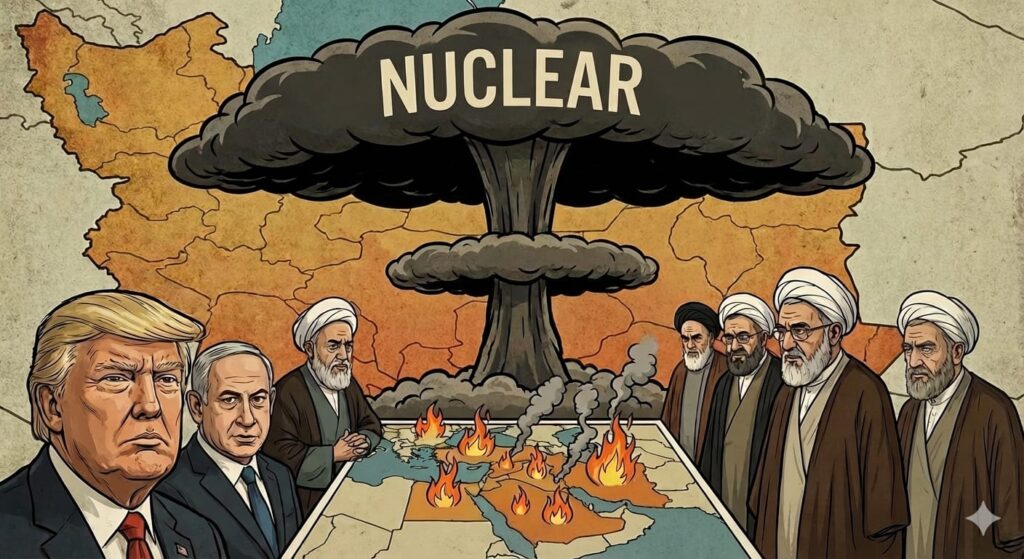
What is the end state of this current imbroglio, as it is evident that Iran is not exactly suing for peace, Trump’s call for support to ease the blockage of Strait of Hormuz has not been heeded to by NATO countries, nor China. Signs are ominous, an off ramp is required for US to call off the offensive, which doesn’t seem to be available as of now. Knowing the unpredictable nature of Trump, it may just happen as suddenly as it began, with him announcing that they have achieved their aims of denuclearising Iran, as he did last time around having bombed Iranian nuclear facilities and claiming to have decimated them. That may end the war as of now, but peace will still remain elusive.
STRAI(GH)T OF HORMUZ

 ‘Strait’ of Hormuz is in the eye of the storm these days, frankly it is hardly ‘straight’ so to say, and is actually quite ‘crooked’, both in the physical domain as also in its characteristics. In fact the whole world is running around in ‘circles’ as the ‘strait’ in question has put the world leaders at large in ‘dire straits’. Geographically ‘Straits’ are narrow stretches of sea, separating two land masses, thus enabling a chokehold by the dominant power restricting its usage. These ‘straits’ require a ‘straitjacketed’ approach to ensure unhindered flow of maritime traffic but that would be a ‘straight’ forward way of addressing the issue. Trump is known to be a ‘straight’ person when it comes to his sexual orientations, but here his approach is as crooked as the ‘strait’ in question itself. 

‘Straight’ lines are drab, boring, curves make it interesting, Trump himself is known for his preference for the undulating features of human anatomy, so his having taken a fancy to this Strait of Hormuz is no surprise. He has decided that he is the only one who can have any kind of rights on such a prized possession, Iranians had to be shown their place, that is as ‘straight’ and simple as it can be. To set the record ‘straight’, he has even been indulging in some ‘straight’ talking, asking for the Iranian Mullahs to shun their obduracy and their flowing robes, instead they ought to adhere to the straight dress regulations, the lesson which he imparted Zelensky too some time back. But unfortunately the Mullahs are not interested in raising their hands ‘straight’ and have taken to shooting ‘straight’ at all and sundry. Keeping a ‘straight’ face may be quite a task, when one has it ‘straight’ from the horse’s mouth about Trump’s ‘straight’ from the heart desire for propagating peace all along while bombing poor Iranians.

Well, one can’t blame him, after all it is difficult to think ‘straight’ when one is tempted by the prize of going down in history as the President who sorted out the Mullahs once and for all and even avenged the Tehran hostage crisis of 1979. The Americans have been very ‘straight’ in their ‘strat’-egy when it comes to oil, they are prepared to bend all rules and not get stuck in ‘straight’ kind of morality, that is the crux of their ‘strat’-agem.  They have strat-etegised and decided they will use the strat-osphere for their missiles, even if it leads to disastrous outcomes for the ‘strata’ of the mother Earth. 

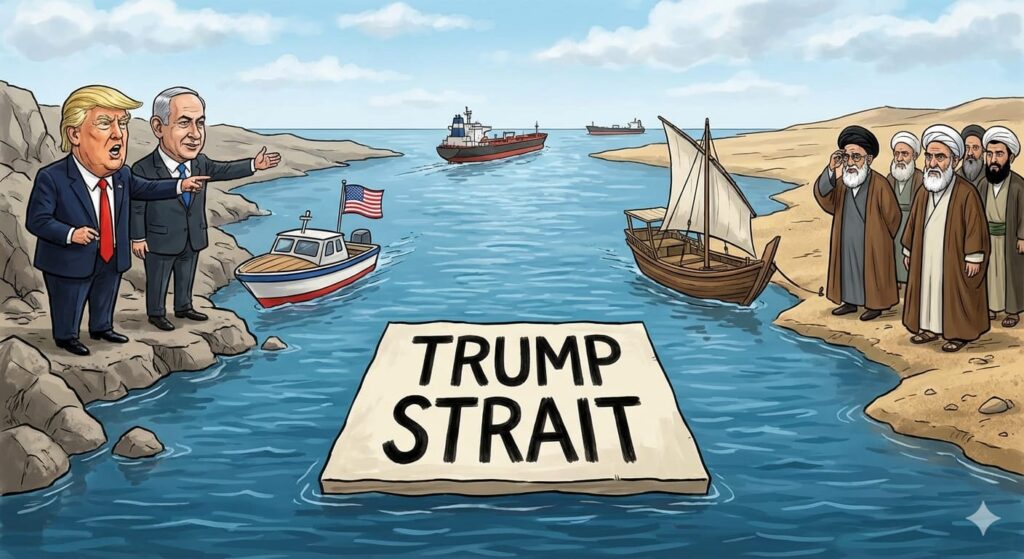
Getting back to the geographical aspects of the strait, the other famous straits in the world are Sunda, Palk,  Malacca and so on, they all are relatively ‘straight’ in their alignment, where as this Hormuz doesn’t seem to follow this simple requirement. Obviously this needed to be ‘straight’ened, and then the name itself Hormuz, why can’t they keep it simple and ‘straight’, why such tongue twisters. Trump wants it to be named after him, as straight, as it can be, ‘Trump Strait’, guess the Iranians might as well name it that and let the world get back to business straight away.

VIVA RIMC

 We are back where we belong, every brook, every pebble, every tree seem to beckon to us, the roads which brought us into the Rajwada Camp and the very same roads bid us adieu five years later, much richer not just in terms of academic knowledge, but in experience, having nurtured us, prepared us with those blows on our very own anvils ready to take on the world. That is the story of every Rimcollians who stepped into the haloed portals of the Thimayya Gate, in the past century plus, thousands of us been converted into believers in a unique identity, which is defined by impeccable integrity, loyalty and camaraderie, casting aside our region, religion, caste, language and becoming just a “Rimcollian”. This moniker which we earn after spending five formative years here, just about sums up our whole persona and the world especially the uniformed fraternity in India knows, what to expect from this individual. After all which other institution can boast of six Indian Service Chiefs, the first Victoria Cross and the first Param Vir Chakra apart from hundreds of other gallantry awardees and several Army/Navy/Air Force Commanders  in Chief who have blazed a trail of unmatched glory. So it is natural for us to get highly nostalgic when we come here year after year, trying to relive our days through the antics and achievements of the bright young cadets whose scintillating and dazzling performances leave speechless, wondering whether we were ever good enough to do that.

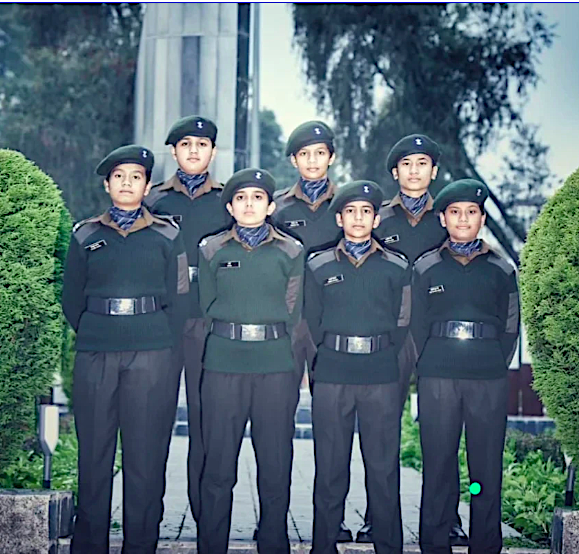
This year again, luck smiled on me and I was able to make it for this annual pilgrimage of sorts. Last two years, I had to give it a miss due to pressing and unavoidable commitments. Although to be frank I was here in Jan this year and savoured the moments spent, with my better half, Preeti, daughter Ananya and son in law , Dr Amit in tow, but that was more of a family thing. Hailing from an Army background, he was aware about RIMC and then he fell in love with a Rimcollians daughter, who wouldn’t stop talking about her Dad’s school. So we initiated him into this ‘cult’ of Rimcollians extended families. More about that some other time. This year Rimcollians reunion felt different from the previous ones for one very obvious reason, the presence of girl cadets in every activity, at times even overshadowing the young lads. The lasses, I believe are 47 in numbers in a total strength of 282, barely 16 % but have started to just about spreading their wings before they take flight. Whether it was Boxing, where diminutive Arnika landing punches on her hapless opponent or little Simran displaying perfect poise and control during her round of show jumping, but the piece-de-resistance was the evening Cultural programme where they literally floored us with their confident stage presence, flawless rendition of poetry describing their journey so far in this male bastion, which they have literally stormed or their petite dance moves displaying that they have not shed their feminine side but have simply added to it, which I dare say only this gender is capable of. 


As we finally say ‘Au Revoir’, I would like to compliment the Commandant and Team RIMC for the way in which you are shaping these cubs into tigers/ tigresses of the future. The nation will owe its gratitude to you as well, some day, when these Rimcollians will tread a similar path like most of us did, in the past hundred plus years of RIMC.  To the young lads/lasses, welcome to the fraternity of three feathers, today they are Peacocks’ (RIMC Crest)tomorrow they shall be Ostrich’s (Rimcollian Old Boys Association Crest)…Viva RIMC! Ich Dien! (I Serve!)

RACE FOR AI LEADERSHIP


Artificial Intelligence is the buzz word these days and the world in general is not sure where this race is heading, is it to eventual doom, the Terminator nightmare coming alive or is it for the greater good. No one has the answer actually, even Sam Altman will be at a loss to indulge in crystal gazing. But this gorilla called AI is very much in the room and cannot be ignored any longer. We have to court it, befriend it and actually tame it to perform tricks as per our commands. A layman looks at this new animal with apprehension, as he is a little scared at the turbulence it is expected to cause in his normal life, as he has lived since ages. Imagine, if all the low level workforce was laid off, how will they sustain themselves? Will they be living off the doles dished out by the government alone or will they be able to reinvent new roles for themselves to be able to be useful to the society in general and in the bargain earn their own livelihood comfortably? The recently concluded AI Summit has made this abundantly clear that this AI is not mere hype nor a bubble waiting to be burst. 

Once we realise that AI is part of our life now on, as ubiquitous as the internet, in our palms through the gadgets, we will learn to exploit it gradually. More importantly, the scientists and innovators have their job cut out, they have to be leading the pack, rather than be reduced to do menial work. Although we start with a handicap as US and China are way ahead in the race for the Digital infra which is already in place, but we as a nation have started to take some baby steps towards that direction. The major requirement for creating this infra is Finance, then the humongous quantity of power supply, qualified human resource and finally the will of the govt and the people.  We have an edge in terms of the technical acumen, in other fields govt has to take the lead in giving it the necessary push by providing all kinds of incentives. We need to channelise this in the right direction, that is what this summit has provided us with.

While we all are gushing over the capabilities of AI, the concern about AI sovereignty raised by the PM Modi ji should be heeded to by the Digital Tzars, as also by all the nation states, as in the wrong hands, it is extremely dangerous. AI, it must be remembered does not distinguish between good and evil, it just executes the command, something akin to Aladin’s Djinn. In the wrong hands, terrorists and adversaries will have a field day, as technological secrets such as chemical or biological weapons will be spilled out at a click.  Every coin has two sides, so naturally AI also provides the law enforcement agencies with the wherewithal to track, trace and keep in check the rogue elements. In fact AI has provided the developing countries with the opportunity to take a leap of faith and join the developed countries by exploiting the tremendous potential of AI in health, education, agriculture and even industry.

India has to start investing heavily in education and R&D, as currently both these areas are not really on the radar of the hierarchy.  Students will of course exploit AI as part of their curriculum, but if we aspire for leadership roles, we have to be ahead of the curve.  Similarly investment in R&D, not only from the government but also from the industry is mandatory. The TCS, Wipro, Infosys, HCL etc have to get out of their comfort zone and should be investing in Data Centres of their own rather than depend on offshore ones. Indigenising the infra is the first step towards AI sovereignty. Moreover with captive capabilities, they themselves will be steering this highly competitive field. We missed the industrial revolution, played catch up in the information age but in the AI era, we have the ability to lead from the front and owe it to our future generations, that is what our natural intelligence conjures.

A TRIBUTE TO DEAR WEGU

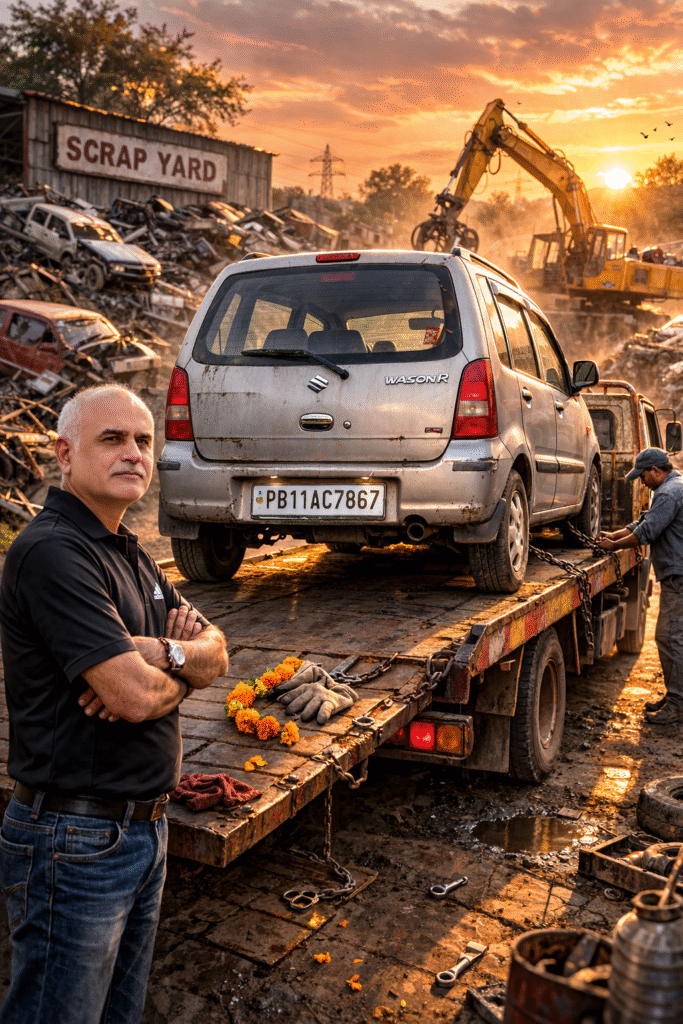
 It feels like someone in the family is due to depart on her final journey to the scrap yard, the ‘her’ here refers to our beloved hatchback Wagon R LXI, purchased twenty years ago in Feb 2006. This association has been a cherished one, as she covered the length and breadth of the country in these past twenty years, moving along with us. It was lucky, no doubt, with its registration number being ‘7867’.Life of our (fauji fraternity) cars are like that, for most of us, especially the ones who are newly minted veterans or the seasoned ones, the current generation is of course a little different where use and throw model is more prevalent and such long associations may not even last with their respective spouses.

Be that as it may, this one is highly nostalgic, after all she saw our kids grow up, when Ananya, my daughter would plonk herself right behind the driver’s seat and sing her nursery rhymes into my ears to driving the car herself as a doctor while in Delhi. My son, Abhijat, took his first driving lessons on this in Secunderabad managing to crash it into a tree, its first of the many brushes with minor and major accidents. Memories of our pet Labrador ‘Buddy’, who was brought home in Wellington and finally took his final journey too while in Delhi in our dear ‘Wegu’, as my children lovingly called her. She is widely travelled, from Chandigarh to Patiala, thereafter to Simla, Kasauli a number of times and then it braved the arduous route to Badrinath, Kedarnath via Dehradun, Rishikesh. When it was time to move to Wellington, she enjoyed the curves, as much as we did. In Secunderabad, she successfully managed to keep herself safe from the two wheeler borne fidayeens, who emerged from any and every angle. While in Delhi she suffered the traffic jams, as my better half Preeti moved from tutoring the inder privileged kids to training the budding Air Hostesses in Frankfinn, but except for minor brushes here and there, she survived without any major blemish. Soon we moved to Ranchi, her stint in Dipatoli Cantt was quite relaxed, as being in a small town, she enjoyed the well deserved retreat, after a hectic Delhi stint. It was back to Delhi soon and once again she was on the road crisscrossing the length and breadth of NCR, generally attending to social dos, weddings etc, as official travel was now in the Staff Car. It was time to move to Udhampur, once again, she was back in the hills and enjoyed our drive to Katra, at the feet of Mata Vasihno Devi, as also the not so frequent jaunts to Jammu, Patni Top etc. Although she was getting on in age, nearing 15 years, when she could have opted for a VRS, we chose to stick with her, getting her registration extended for another five years.

 When we moved back to Delhi, she participated in the fight against Covid, as Dr Ananya was required to report for duty in the Base Hospital. But then Delhi cops are not the ones to indulge in any nostalgia, so one fine day, when we were taking a trip to Manesar, they caught up with us, despite my pleas of being an army officer, a DIG in NSG, which fell on deaf ears, I was asked to return to my residence and not drive the vehicle in Delhi. I had written about this vehicle discard policy earlier, (https://thesuyashsharma.com/kar-bekar/#comments). So, a decision was taken to bring the car to Indore, my hometown, leave it with my parents. We drove down this 17 years old convertible (in human years about 70 plus) and not once did she create any problem en route. She was the mainstay in both the weddings at home of my son Abhijat and Ananya, in fact both of them chose to be driven in their ‘Wegu’ after the rituals, wanting to make their spouses also part of this family tradition. 

She has braved the Indore-Mhow road which of late has more potholes than flat pieces of ground, which in fact helped us decide in favour of settling down at Indore rather then Mhow. Now with more than 100000 kms on the road, I think it is time to give it much needed rest. Incidentally, she has a younger sibling too now, though she is much bigger in size, a Kia Seltos, who joined the family in Jun 2023. Although in hindsight a newer model of dear old reliable Wagon R may have been a better choice, given the condition of traffic in the city and unlikelihood of any major road travels in the foreseeable future. Hopefully she will see us through for the next twenty years. Adios Wegu, RIP.

LADAKH:A STORM IN THE TEACUP


The storm in the tea cup in Ladakh raised allegedly  by the unpublished book by Gen Narawane, whose excerpts appeared in a magazine some time ago, refuses to die down. This time it was Rahul Gandhi who raised the issue in the parliament, seeking clarification from the govt. As per parliamentary procedure and traditions, the President’s address is not the appropriate occasion to raise this issue, as the responses have to be restricted to the matters included in the address per se. But notwithstanding that, the issue having been raised in public on earlier occasion as well, the treasury benches should have responded in a befitting manner rather than brusquely obfuscate it blatantly. Obviously the opposition parties will draw political mileage out of any such developments. Government on its part should have assured the LOP that the issue will be responded to in the parliament after the President’s address and the responses thereto have been gone through.

While politicking may continue, the more pertinent issue is the veracity of the claims published in the Caravan magazine. If, as claimed in the article, these are excerpts  from the unpublished memoirs of Gen Narawane, former COAS, then it is a matter of concern. Firstly, a COAS knows that any incident on the Line of Actual Control (LAC) with China is a sensitive one and falls in the category of classified subjects. He is also aware that he has to seek permission from the govt before publishing anything which may be detrimental to India’s security concerns. For the record, Henderson-Bhagat report on 1962 Sino-Indian conflict is still kept under wraps, so any outstanding issue, in the current scenario, ‘the stand off’, which is yet to be resolved in its entirety, will obviously not be declassified so early. If the COAS was aware, then how could he permit the publisher to release the excerpts for publication? If he did not permit it, then why hasn’t he come forward to castigate the publisher and sued him for breach of trust and contract? So was there a tacit understanding, that such a revelation would ignite a controversy which will help the sale of the book and will work as a teaser for the potential buyers? The only person who can clarify these issues is the author himself and he should come forward to clear the air once and for all.

The issue of lack of any directive from the govt for a considerable period of time, on the reported movement of the Chinese tanks in the disputed area, puzzles me. There are explicit instructions on any such violations with the formations and the commanders at the appropriate level address them as per the protocol, keeping the higher HQ in picture. When a senior commander feels that a different set of actions are to be taken, he issues orders accordingly, again keeping his hierarchy informed.  The commanders looking over their shoulders for instructions at such critical junctures is a sure recipe for disaster. The Corps Commander in this case would have had near four decades of experience and  was thus entrusted with such a crucial assignment of safeguarding the LAC. The predicament faced by the commander is essentially whether he should play safe, seek directions or take command decisions. In my opinion, these are the moments when the Tiger in him must awaken to give clear directions to the subordinates rather than await orders. Similarly, up the chain, commanders were passing the buck rather than tackling the bull by the horns. One understands that matters with China are not the same as they are with Pakistan, but this pusillanimity puts a question mark on their professionalism itself. We have had instances when Generals have disobeyed orders, Lt Gen Harbaksh in 1965 Indo-Pak war and Maj Gen (later Lt Gen) Sagat Singh in 1967 NathuLa. In both the cases their stand was vindicated. As the adage goes, ‘no risk no gain’, commanders ought to trust their own judgement as they are in situ and have a much better understanding of the tactical picture.

Government on its part has also not covered itself with glory, as in the first instance itself, the response should have been the same which appeared after what reportedly took almost three hours plus, “Jo Uchit Samjho Wo Karo!”  giving the commander a free hand in dealing with the situation. Commanders thus must rise to the occasion and be prepared to face the consequences, that is the essence of military leadership.

DEFENCE BUDGET:AN ANALYSIS


It is that time of the year once again, when the projected and planned income expenditure statement for the country is presented in the parliament, referred to as annual budget exercise eagerly looked forward to by all and sundry. Budgetary allocation for different sectors is  an indication of government’s priorities. For a developing nation like ours given our security paradigm, it is a delicate balance and the debate on guns versus butter has to be tackled in a nuanced manner to ensure that the defence gets adequate boost while economic upliftment of the masses is not compromised either.

Defence budget outlay over the last few years has been steadily rising, with almost 40% increase over the last five years in nominal terms, with this year allocation touching a record ₹7.85 lakh, up 15.2% from last year’s   budgeted ₹6.81 lakh crore. Last year, when the budgetary provisions for capability development and modernisation was pegged at  ₹1.86 lakh crore at the RE stage, this year it has been enhanced to ₹2.19 lakh crore, a substantial increase of 21.84%. In view of OP SINDOOR last year and in the current geo-strategic uncertainty, a fillip to the defence expenditure was expected. ₹63,733 crore for aircraft and aero-engines, ₹25,023 crore has been allocated for the naval fleet, while ₹3.65 lakh crore has been allotted under the Revenue Head for operational needs, including daily running expenses like ammunition, fuel, salaries and repairs. ₹1.71 lakh crore has been set aside for defence pensions, about 21% of the total budgetary provision. As is evident, the Revenue expenditure continues at almost 62.5% of the overall financial allocation, which leaves just about 37.5% for modernisation needs. In this hi tech era, where warfare itself has been revolutionised, in the form of Cyber, Space, Drones, AI, Missiles and Rockets, India desperately needs to invest in indigenisation of its armaments as also in  Research & Development, as our principal adversary to the North is miles ahead of us and has much deeper pockets. 

We have made a little progress in the last couple of years, with domestic defence productions touching around ₹1.51 lakh crore in FY 24-25, an 18% increase over the previous year. We have also taken some measures to boost our defence exports, which have risen to almost ₹23000 crore, primarily radars, torpedoes, electronic warfare systems, patrol boats, helicopters and missile components. India though continues to be the second largest arms importer, after Ukraine in the world as per Stockholm International Peace Research Institute (SIPRI).We are still largely dependent for aircrafts, as Tejas is still a couple of years away from assuming the mantle of our mainstay in the skies. Similarly the  missile air defence systems, the likes of S-400 are all ex-import. The latest budgetary provision of exemption in Basic Customs Duty (BCD) caters to full duty exemption on components and parts as also the raw materials imported for the manufacture of parts used for maintenance, repair and overhaul (MRO) civilian, training and other aircrafts, should provide a boost to the fledgling domestic aerospace industry.

While all the measures taken are welcome, all these amount to incremental changes, rather than any bold steps towards providing impetus to private defence industry towards their expenditure in research and development. The DRDO and PSUs receive the lion’s share of almost 77% and the private sector getting the rest. The former have a very poor track record of deliverance and hence strong checks and measures are imperative, with active involvement of defence services themselves. Private sector has benefitted as they have been banking on the defence veterans providing them the necessary technical expertise. The other major reform which has been pending is the long over due de-linking of pensionary benefits with the defence budget, as it shows an inflated figure, while the actual availability of funds stays around 1.9 -2% of GDP, as against US 3.4%, of $850 billion, of  which 35-40% is for capital expenditure and Chinese1.7% (actual figures may be much higher) of $ 290 billion, of which 30-35% is capital expenditure, as against ours which is pegged at 25-27% of $82 billion ( figures are from 24-25 defence budgets). Agniveer system was resorted to primarily to address this aspect, but the Defence Civilians (who serve till 60 years of age, as against the uniformed personnel who retire at 35 on an average) continue to form almost 45% of the pensionary expenditure, who could be transferred to another suitable head, making the picture more realistic. Nevertheless, it is a budget which is on the right lines.